Flying in Namibia with your European licence
Validating your European licence in Namibia: step by step into the cockpit
By Lars Holling
Flying yourself in Namibia: here is, step by step, what you need to validate your European private pilot licence.
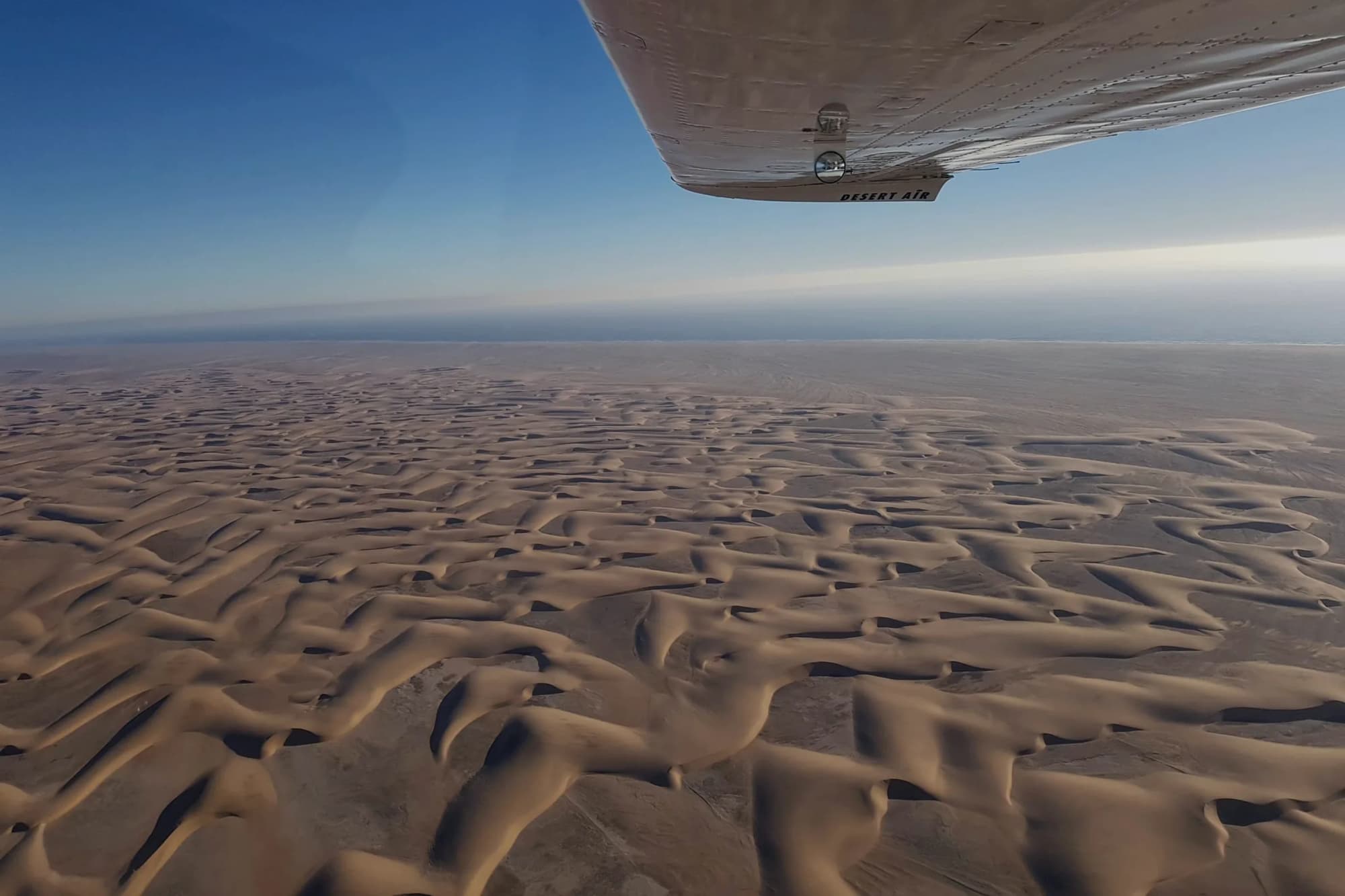
With your German or European EASA PPL(A), you can fly yourself in Namibia. All you need is a validation from the Namibian aviation authority, the NCAA (Namibia Civil Aviation Authority). Vast desert landscapes, the dunes of the Namib, the Skeleton Coast and the Etosha Pan from the air: Namibia is among the most impressive flying regions in the world.
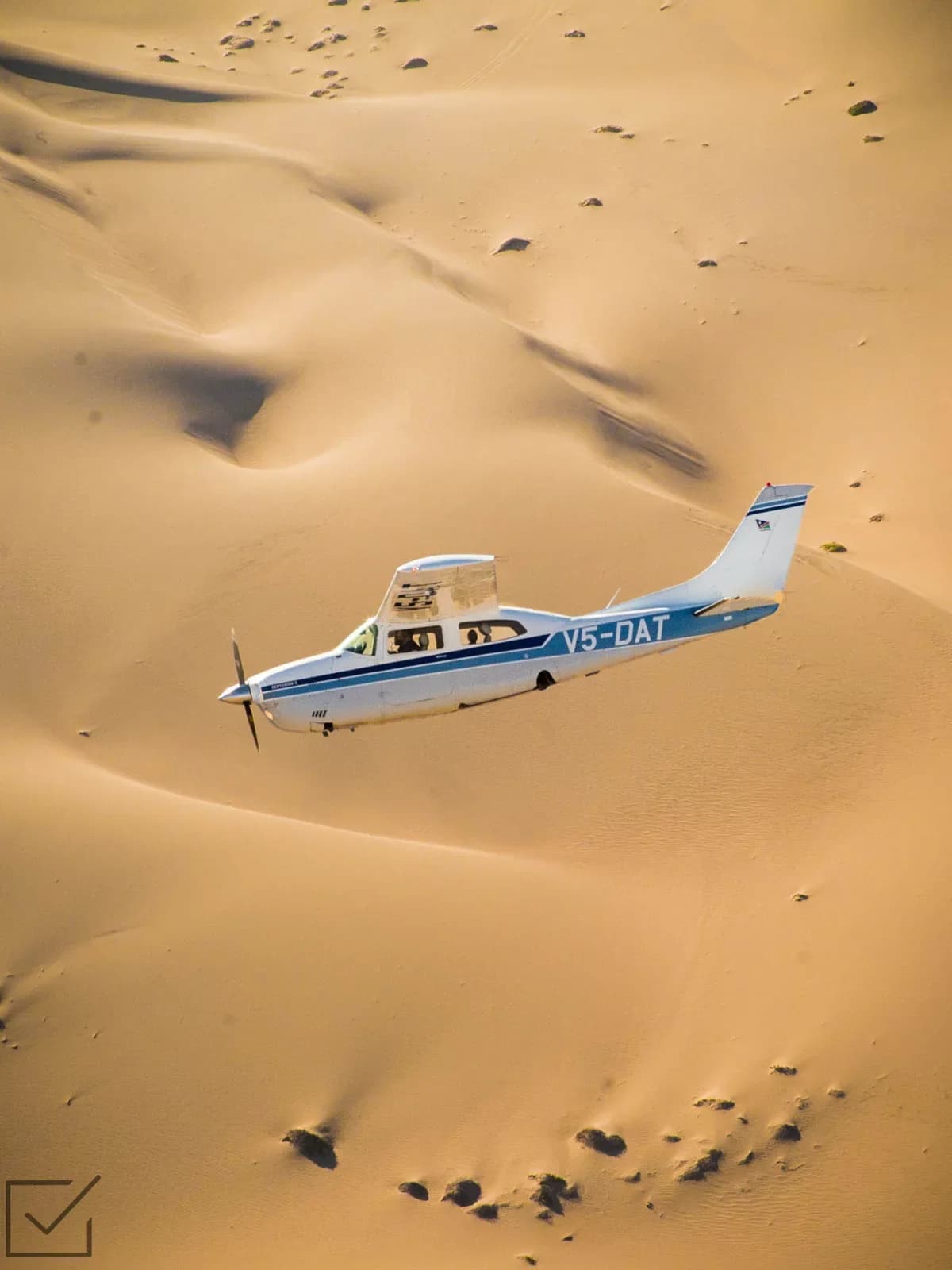
The validation is not a new course of training. Your European licence remains the foundation; the NCAA recognises it for flights under visual flight rules (VFR) in Namibia. At Fly Unique, we work with local partner flight schools and organise the entire process: from the application and travel arrangements through to the flight test.
Step 1: Application to the NCAA and verification of your licence
Everything begins with the application for validation of a foreign pilot licence submitted to the NCAA in Windhoek. In it, you provide your personal details, your licence with class rating (for example SEP land), your medical and your Language Proficiency endorsement. We provide you with the forms: "FSS PEL 61-04 Application for Validation of Foreign Pilot Licence" and the "NCAA Exam Application" for the air law exam.
The NCAA then verifies with the issuing authority that your licence is genuine and valid. In Germany, this is the German Federal Aviation Office (Luftfahrt-Bundesamt, LBA). For the LBA to release this information, you will generally need a signed declaration of consent.
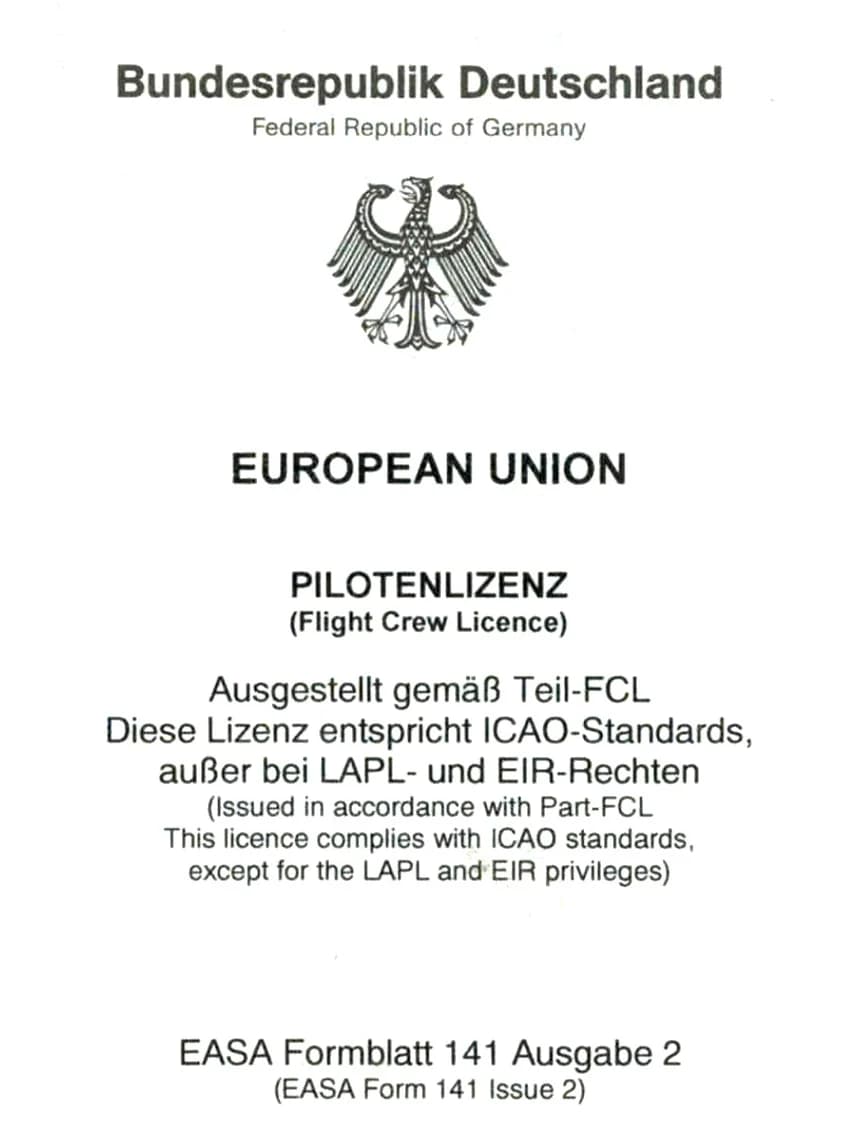
Allow several weeks of lead time for your licence to be verified. Once in Namibia, you will also take an exam in Namibian air law at the NCAA. You can read about how this is conducted and which textbook you can use to prepare in step 4.
Step 2: We plan your trip
As soon as the verification of your licence is underway, we take care of everything else: flights to Windhoek, hotel or lodge accommodation, transfers and appointments at the partner flight school. If you wish, we can combine the validation directly with a fly-away tour through Namibia, featuring landings on lodge airstrips that are difficult to reach in any other way.
Step 3: Hot & High briefing
In Namibia, you fly hot and high. That is the single most important difference compared to flying in Central Europe. Windhoek sits at around 5,500 ft, and on hot days the density altitude quickly climbs well above 8,000 ft. The aircraft then requires noticeably more runway to take off and climbs far less vigorously than you are accustomed to. In the briefing with your flight instructor, you will discuss the local flying conditions in detail.
Briefing topics
- Density altitude and performance
- Calculating density altitude and performance figures for take-off and landing.
- Mixture
- Mixture leaning on the ground and in the climb.
- Loading and fuel planning
- Loading, fuel planning and reserves on long routes without alternate airfields.
- Weather and time of day
- Thermal activity, turbulence and the best time of day to fly.
- Unpaved airstrips
- Sand and gravel runways, wildlife on the strip.
- Radio and airspace
- Radio procedures, mandatory flight plans and airspace in Namibia.
Step 4: Namibian air law exam
For the validation, the NCAA requires a theoretical examination in Namibian air law (Air Law). It takes place as a written multiple-choice test at the NCAA in Windhoek. The exam focuses primarily on differences from European regulations.
Topics in the air law exam
- Regulations and privileges
- Namibian Civil Aviation Regulations (NAMCARs) and privileges granted by the validation.
- Airspace and visual flight
- Airspace structure, visual flight rules and weather minima in Namibia.
- Flight plans and reporting
- Mandatory flight plans, reporting procedures and radio procedures.
- Airfields and border crossings
- Airfields, landing permissions and procedures for crossing international borders.
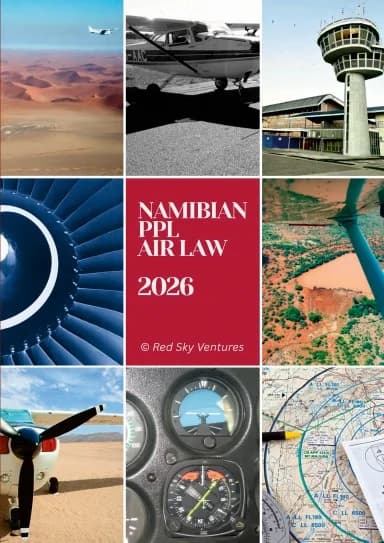
For preparation, we recommend the textbook "Namibian PPL AirLaw 2026" by Danielle Bruckert (in English, 102 pages, paperback). It summarises the exam-relevant content from the Namibian Civil Aviation Act, the NAMCARs and NAMCATS as well as the Aeronautical Information Publication (AIP), and also serves as a handy reference for flights across Namibia later on. We advise ordering it a few weeks before your trip.
Your flight instructor prepares you specifically for the exam during the briefing. With the materials you receive from us in advance, experienced pilots will find it straightforward to pass.
Step 5: Training flights with your flight instructor
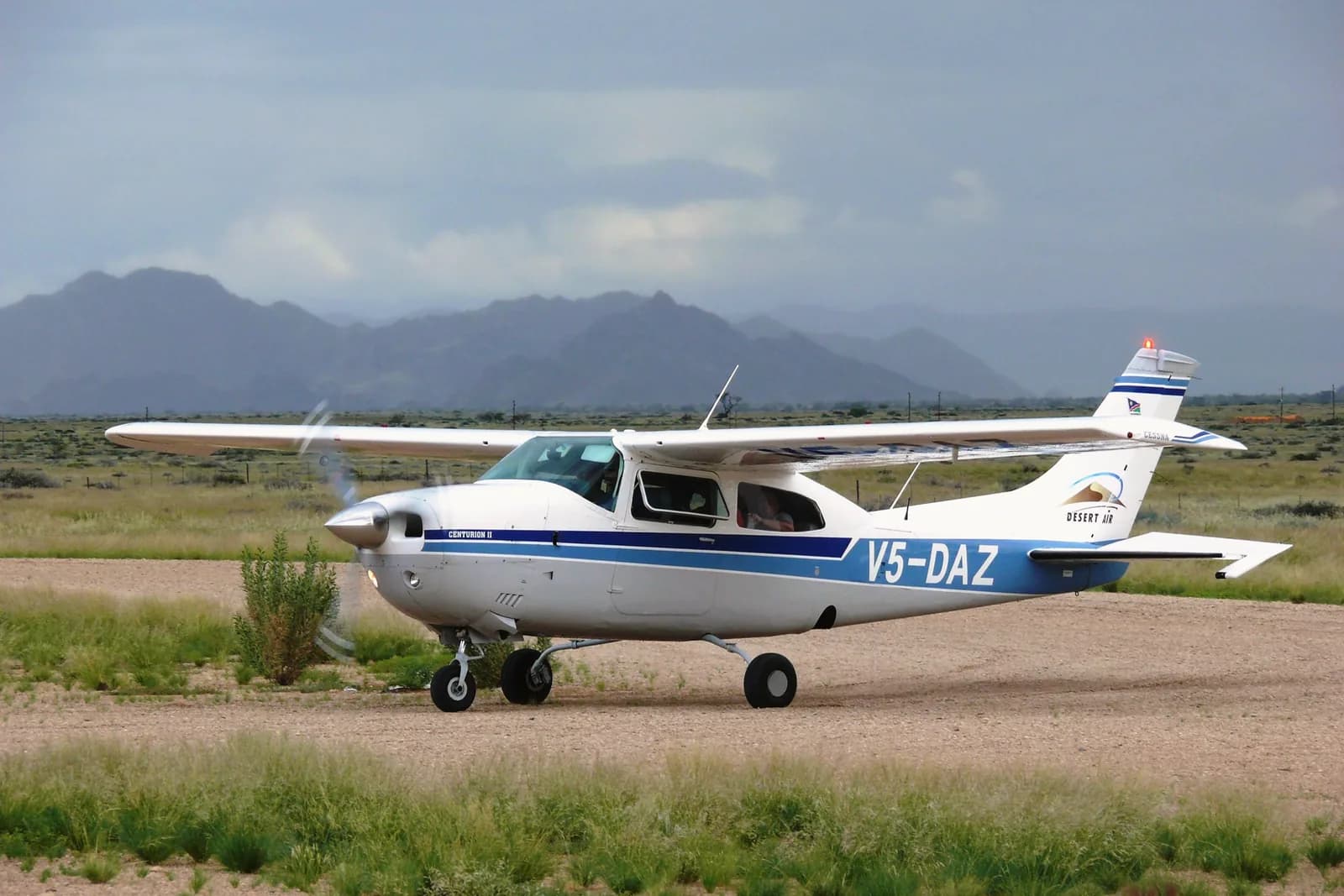
Following the briefing, you will fly with an instructor from the partner flight school. You will receive a checkout on the aircraft you intend to charter and put what you learned in the hot and high briefing into practice: take-offs and landings at high density altitude, short-field operations on unpaved runways, navigation over largely featureless terrain, and radio communication with Namibian air traffic control.
How many training flights are required depends on your experience. Typically, one or two flights are sufficient until both you and your flight instructor feel completely confident.
Step 6: Flight test with the DFE
Finally, you fly with a DFE (Designated Flight Examiner), an examiner appointed by the NCAA. The examiner reviews your documents, discusses flight preparation with you and conducts a check flight. This is comparable to a proficiency check in Europe.
Once everything is in order, the DFE submits the results to the NCAA, and you receive your Namibian validation. It is valid in conjunction with your European licence and your medical for VFR by day in Namibia. From then on, you can charter aircraft and explore Namibia as pilot in command.
Your checklist
What to bring
- EASA licence
- Valid PPL(A) with a current SEP (land) class rating.
- Medical
- Valid, at least Medical (Class 2).
- English language endorsement
- Language Proficiency, endorsed in your licence.
- Passport
- Valid for at least six months beyond the end of your trip.
- Logbook
- Showing evidence of your recent flying experience.
- Declaration of consent
- For the verification of your licence by the LBA.
- NCAA forms and passport photo
- Completed application for validation and "NCAA Exam Application" for the air law exam, plus one passport photo. We provide these forms for you.
The fee for the air law exam is payable on site.
Frequently asked questions
In brief
- Do I receive a separate Namibian licence?
- No. The NCAA validates your European licence. The validation remains valid only as long as your EASA licence, class rating and medical are also valid.
- How long is the validation valid?
- The validation is valid for two years and can be extended for another two years by completing a Biennial Flight Review.
- May I fly at night or under instrument flight rules?
- The validation covers VFR by day. Additional NCAA requirements apply for night or IFR flights.
- How long will I need on site?
- You should allow two to three days for the briefing, air law exam, training flights and flight test. After that, your actual flying holiday begins.
- Do I need a visa?
- That depends on your nationality and current entry regulations. We check this for you as part of the trip planning.
Questions? We are here to help
Validation in Namibia is simpler than it sounds, and flying there is an experience you will never forget. Please feel free to get in touch. We will answer your questions and guide you step by step all the way to your first flight over the Namib Desert.
Sources
- NCAA
- Application for Validation of Foreign Pilot Licence (FSS PEL 61-04) and Exam Application
- Danielle Bruckert
- Namibian PPL AirLaw 2026
Request a trip
Your way into the cockpit over Namibia
We accompany you from the NCAA application and the trip planning to your first flight with our partner flight schools. Call us or write to us, and we will plan your trip.
Mobile: +49 172 1999835