
Solving problems before they reach you
What an IRREG is, and why you usually never notice one
By Lars Holling
A cancelled flight rarely gets better by finding out at the counter. In aviation this subject is called IRREG. Here is what lies behind it and how we deal with it, usually without you noticing a thing.
In April 2010 volcanic ash lay over Europe and the airspace was closed to anything with a jet engine. Millions of travellers were stranded, the airline hotlines were dead, and the queues in the terminals did not move for hours. One of our clients was not standing in that queue. We put him into a four seat aircraft with a piston engine and flew him ourselves. He still remembers it with a smile.

What exactly is an IRREG?
IRREG is short for irregular operations. It covers any unforeseen deviation of your flight from the plan: a delay, a cancellation, a diversion. The trigger can be an air traffic control strike, an ash cloud, the weather, or an AOG, an aircraft on ground that is not technically fit to depart.
The most common triggers
- Air traffic control
- A strike or a capacity shortage. One overloaded sector shifts departure times across half of Europe.
- Weather
- Fog, snow or thunderstorms at the departure, arrival or alternate airport. The delay often starts somewhere you are not even flying to.
- AOG (aircraft on ground)
- A technical defect keeps the aircraft on the ground. Whether a replacement arrives is usually decided within the first hour.
- Crew
- The legal duty time runs out. The crew may then no longer fly, even with the aircraft standing ready.
- Rotation
- The inbound flight arrives late. That single delay travels through the aircraft's entire day.
Airlines record every delay internally with a two digit IATA delay code, 41 for a technical defect for example. For you as a traveller the code changes nothing. For us it is a reliable hint whether this takes twenty minutes or the whole day.
Easter, in the late nineties
My first real encounter with the subject came during my training. A group was booked to Asia, the national airline of the destination country went on strike, and it was Easter. Anyone who has tried to move a whole group to Asia at short notice over Easter knows how full those aircraft are.
We obtained an FIM from the airline, a flight interruption manifest. It is the authorisation to rebook all clients onto another carrier. The group was rebooked and informed before the first traveller had even left for the airport. Everyone flew as planned, and the programme on the ground, it was a study tour, started on time.
What the years after that added
During my time at the world's largest flight ticket wholesaler, strikes, ash clouds and wars were added to the list. The pattern was always the same: whoever knows early still has a choice. Whoever finds out at the counter only has a queue. Back then too, we almost always found a solution for our clients before they departed.
There is always a way. With flight irregularities that is not a slogan, it is how we work.
Lars Holling, founder of Fly Unique
How we see it before you notice
Irregularities land in the reservation system on what is called a queue, a kind of inbox for exactly these messages. Airline email notifications come on top of that. We see a cancellation or a delay the moment the airline files it, and that is usually earlier than any app tells the passenger.
The alert then turns into a search. A single query shows us which airlines still serve the route on the same day, which booking classes are open and which connection keeps your onward flight.
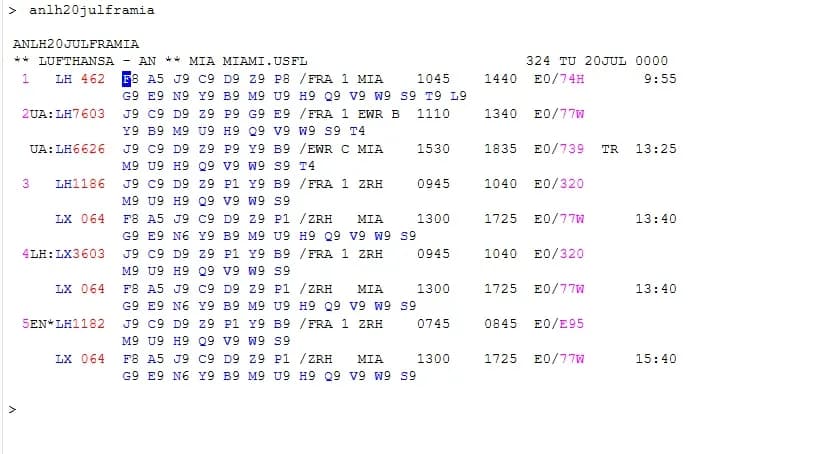
If your connection is cancelled while you are still airborne, we often have the information while you are still sitting in your seat with the belt fastened. At best the new connection is in place before you leave the aircraft. You step off and get the solution from us, not the bad news.
What this means for you
With us there is no hotline, no case number and no hold music. You get a number where someone picks up who knows your booking. We act before you have to ask, and if it does get tight, we tell you honestly what is possible and what is not.

And if all else fails, there are still small aircraft.
Request a trip
Let's talk about your trip
Tell us where you would like to go. Whatever gets in the way after that is our job.
Mobile: +49 172 1999835